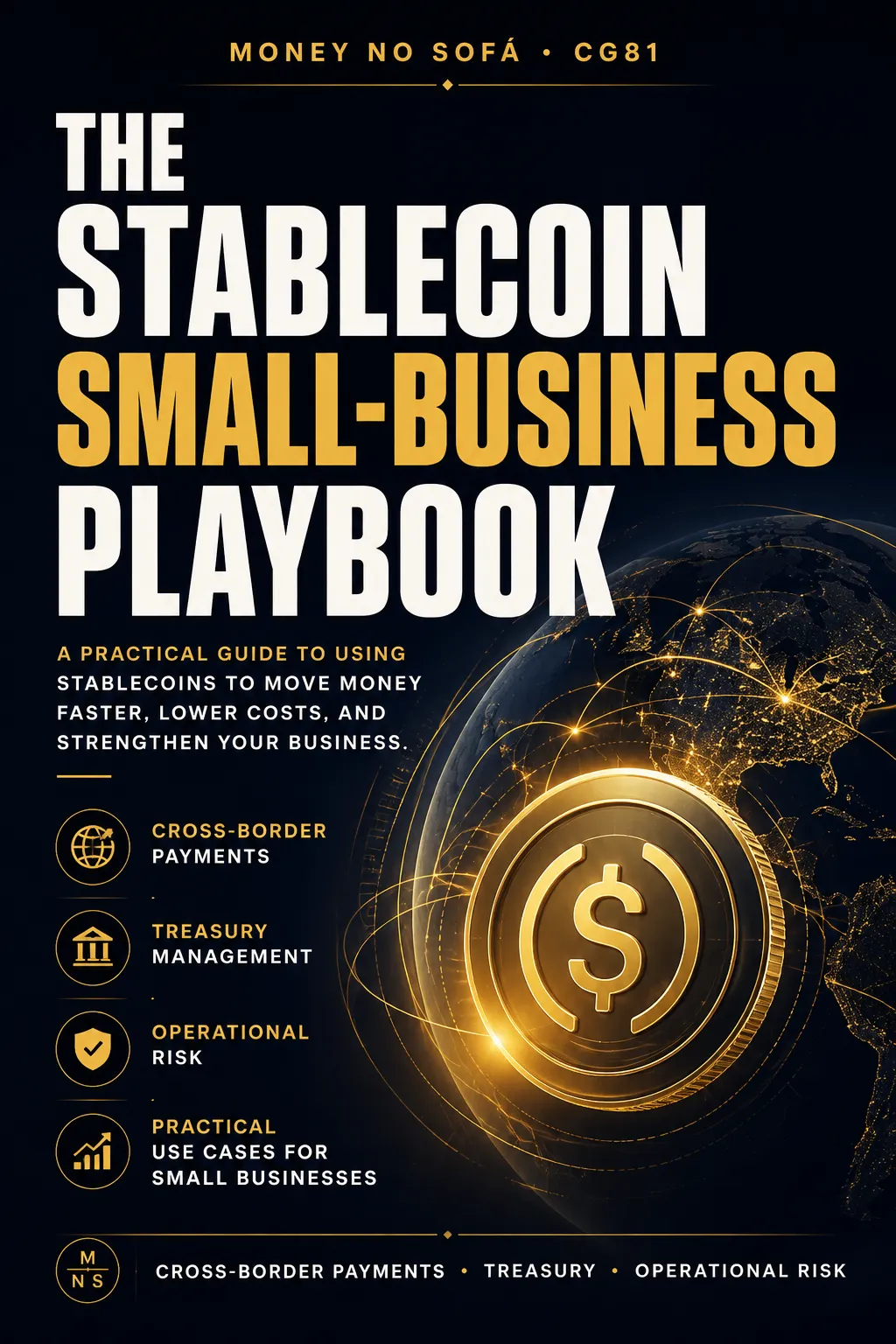
Use stablecoins only where they solve a real business problem.
A practical framework for small businesses evaluating payments, cross-border settlement, treasury use, custody, compliance and operational risk.
- Identify the payment corridors that matter.
- Map custody and access before money moves.
- Design a controlled pilot.
- Measure economics instead of chasing hype.
Stablecoins are useful when they remove expensive friction — not when they become ideology.
This book treats stablecoins as payment infrastructure. The core question is whether a specific corridor, contractor flow or treasury process becomes cheaper, faster or easier to reconcile.
Find the real use case
Separate practical payment and treasury needs from experimentation that adds more complexity than value.
Map operational risk
Clarify custody, access, recordkeeping, reconciliation and failure modes before launching.
Test before scaling
Use a limited corridor, clear controls and measurable success criteria before broad adoption.
A business-first stablecoin framework.
From use-case selection to payment architecture, controls and pilot economics.
Four problems worth evaluating
Payments, cross-border settlement, contractors and treasury applications without crypto theater.
Architecture before assets
Understand the operational path from payer to settlement, custody and reconciliation.
Who can move the money?
Define access, permissions, wallets and recovery before funds are exposed.
Records and controls
Build recordkeeping, approvals and review into the workflow instead of bolting them on later.
Operational failure modes
Map phishing, key loss, wrong-address risk and internal access before they become incidents.
Does the corridor actually improve?
Measure fees, time, reconciliation effort and reliability against the existing process.
The right question is not whether stablecoins are “the future.” It is which payment corridor has enough friction to justify a new rail.
For operators evaluating infrastructure, not speculation.
Built for practical business decisions.
- Small-business owners with cross-border payment friction.
- Finance and operations teams evaluating new rails.
- Companies paying international contractors.
- Operators who need a pilot framework before committing.
Before you open the book.
Does the book recommend stablecoins for every business?
No. The entire framework starts by asking whether the current payment problem is severe enough to justify a new rail.
Does it cover custody and security?
Yes. Access control, custody, reconciliation and operational failure modes are core parts of the book.
Is this legal or tax advice?
No. Businesses must verify current legal, accounting and tax requirements for their jurisdictions.
Evaluate the rail before you move the money.
The eBook is available now through the official Money no Sofá Shop with secure WooCommerce checkout and digital delivery after payment.
BUY NOW →Return to the eBook library →
Educational content only. Not legal, accounting, tax or investment advice.