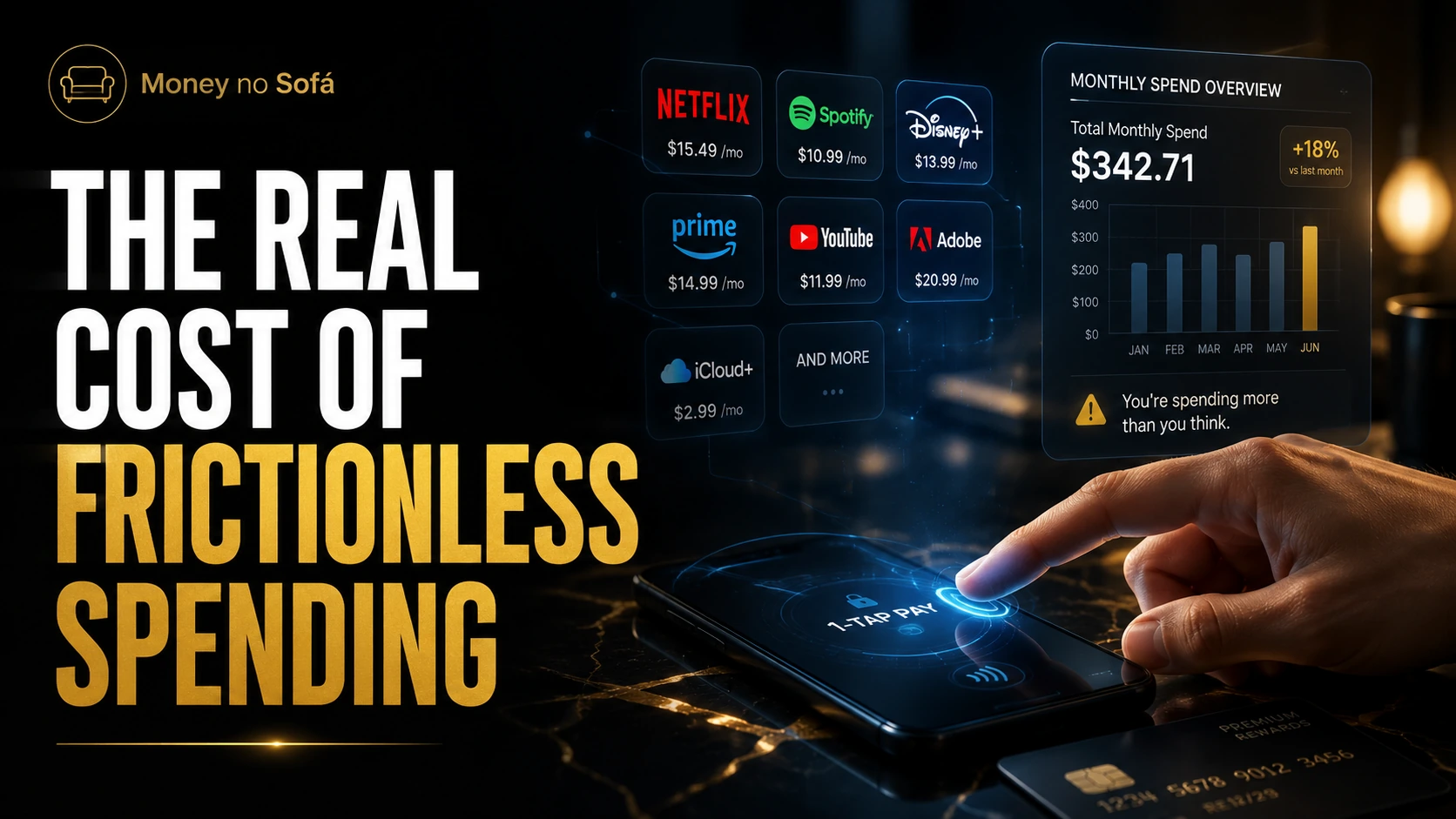
The easier a payment feels, the easier it is to stop noticing it. Frictionless spending changes more than checkout speed.
Spending used to contain friction. You needed cash, a card, a form, a trip to the store or at least a few deliberate clicks.
Digital commerce removed much of that effort. Saved cards, one-tap checkout, delivery apps and subscriptions make buying almost invisible. That is excellent for convenience. It is not always excellent for your budget.
When effort disappears, frequency can rise
The problem with frictionless spending is rarely one dramatic purchase. It is repetition.
A coffee delivery feels small. A streaming add-on feels small. A rush fee feels small. A one-click impulse purchase feels small. Each transaction is easy to justify because the effort and immediate pain are low.
But your monthly budget experiences the total, not the feeling of each individual click.
Convenience changes how price feels
Digital interfaces are designed to reduce hesitation. Prices are stored, cards are saved and recurring payments happen in the background. That creates a psychological gap between consuming and paying.
When payment feels distant, people tend to focus more on the benefit and less on the cost.
This is why a $9 service can feel almost free even when five similar services quietly become a $45 monthly commitment.
The real cost is often behavioral
There is a financial cost to convenience, but there is also a habit cost. Once an easy behavior becomes normal, returning to a slower but cheaper alternative feels inconvenient.
That can create lifestyle inflation without a big lifestyle upgrade.
We explored one version of this problem in The Hidden Cost of Convenience Apps. The broader lesson is the same: small automatic choices can become structural expenses.
Not all convenience is waste
Paying for convenience can be rational. Time has value. Delivery can be worth it on a difficult day. Automation can reduce missed bills. A subscription can replace a more expensive habit.
The question is whether the convenience is solving a real problem or simply making spending easier.
A good convenience purchase should save enough time, stress or money to justify its recurring cost.
Build one useful speed bump
You do not need to make every purchase difficult. You need a little friction around the categories where you tend to overspend.
That might mean removing saved cards from one shopping app, turning off one-click checkout, requiring a 24-hour wait for non-essential purchases or reviewing subscriptions once a month.
A good financial system is not built around constant self-control. It is built around better defaults.
Choose one category where spending feels too easy. Add one deliberate step before payment. The goal is not to stop buying. It is to make the decision visible again.
Money no Sofá — Money for real life.
The headline is only the start.
Ask Nova what this story could change in your budget, savings, debt, investments or next purchase.