Stablecoins do not replace cards everywhere. This practical guide shows where they reduce cross-border cost, settlement delays, and payment friction—and where they add risk.
MONEY NO SOFÁ — PREMIUM EDITORIAL
Stablecoins are not a universal replacement for cards. Their advantage appears where foreign exchange, settlement delays, payment failure, and cross-border friction become expensive enough to justify a different rail.
Approx. 18-minute read
The debate around stablecoin payments is usually framed as a contest: cards are old, blockchains are new, and one will eventually replace the other. That framing is commercially weak. Businesses do not choose payment systems because a technology is ideologically cleaner. They choose the method that converts customers, settles reliably, reduces total cost, fits accounting, and does not create a support problem.
Cards remain extraordinarily effective for domestic commerce. Customers recognize them. Checkout design is mature. Fraud systems, refunds, recurring billing, dispute procedures, and consumer protections are embedded in the experience. A merchant can accept a card without explaining private keys, networks, gas, custody, or token selection.
Stablecoins become interesting in a different environment: an international invoice, a contractor in another country, a customer blocked by local payment rails, a business dealing with long settlement windows, or a currency corridor where foreign-exchange spreads quietly consume margin. In those cases, the relevant comparison is not “stablecoin fee versus card fee.” It is the total operational cost of moving value from the customer to usable business cash.
This article provides a decision framework for small businesses and freelancers. The conclusion is deliberately narrow: stablecoins are not better everywhere. They are better where the existing rail is sufficiently painful.
The card problem is not the card

A card transaction is not one simple movement. It may involve the customer, merchant, gateway, processor, acquiring bank, card network, issuing bank, foreign-exchange provider, fraud controls, and settlement systems. That complexity is mostly invisible, which is a major strength. The customer taps or types. The merchant sees an authorization. The ecosystem handles the rest.
Problems appear when the payment crosses borders or enters a less supported market. The advertised processing fee may be only one component. The merchant can also face currency conversion, cross-border assessments, reserve requirements, delayed settlement, failed authorizations, chargebacks, payout fees, and staff time spent reconciling different systems.
Even when a transaction succeeds, the business may wait days before the funds become usable. For a large company, that delay is treasury management. For a freelancer or small exporter, it can determine whether payroll, advertising, or a supplier gets paid on time.
This is why a fair comparison must begin with the exact corridor. A Brazilian designer invoicing a US client has a different problem from a US retailer selling to a domestic cardholder. A software company paying twenty contractors across five countries has a different problem from a coffee shop accepting local cards.
What a stablecoin payment actually is
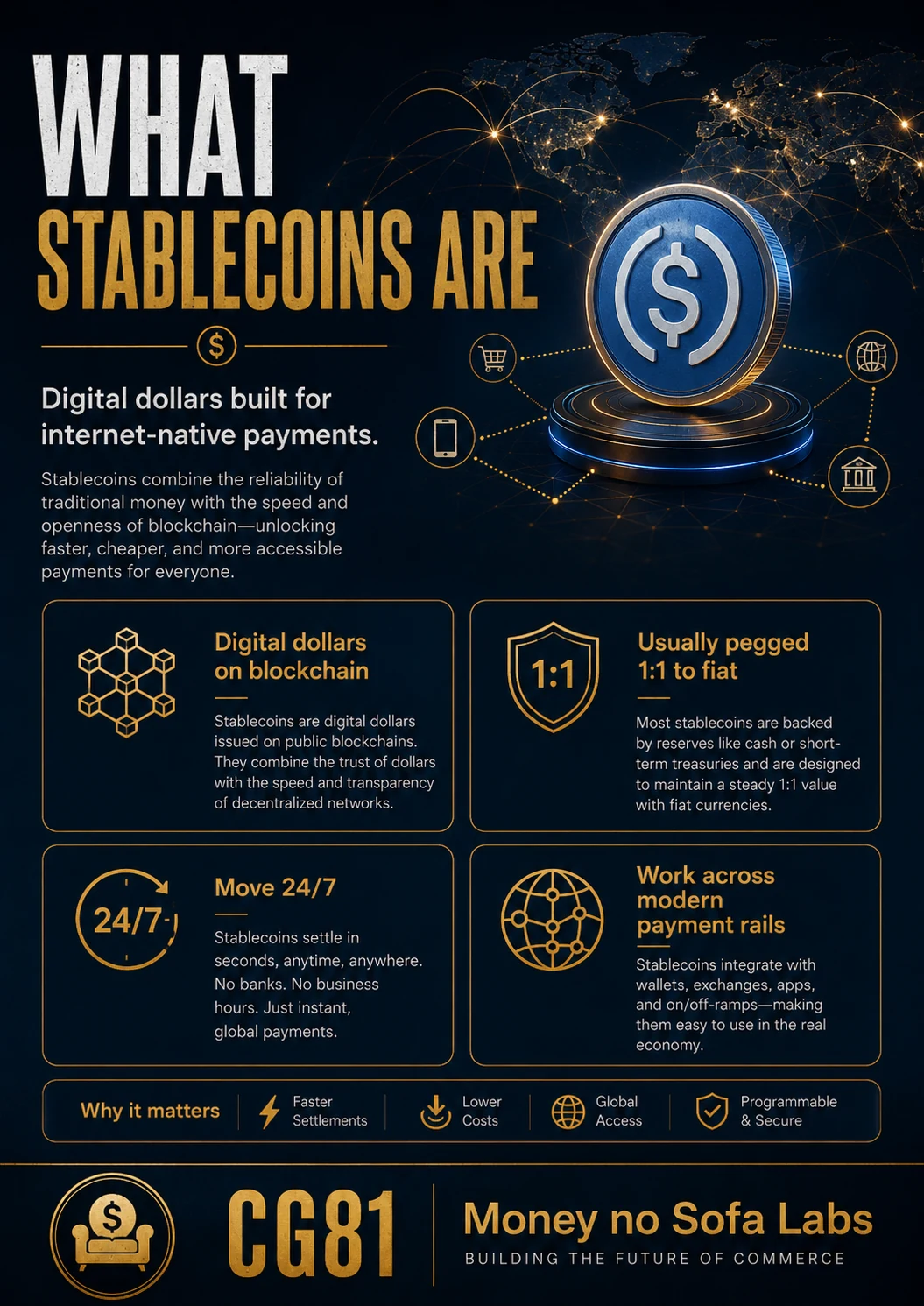
A stablecoin is a digital token designed to maintain a relatively stable value, usually by referencing a national currency such as the US dollar. The token moves on a blockchain network. That simple description hides several layers a business must understand.
- Issuer risk: who issues the token and what supports its value?
- Reserve structure: are reserves cash, short-term government securities, deposits, or other assets?
- Network risk: which blockchain carries the token, and what are its fees, speed, and operational risks?
- Wallet risk: who controls the wallet and recovery process?
- Provider risk: which processor, exchange, custodian, or on-ramp connects the token to the business?
- Conversion risk: how and when does the business convert the stablecoin into its accounting or operating currency?
Many businesses will not hold stablecoins directly. A processor can present a crypto payment option, let the customer authenticate with a wallet, and settle the merchant in fiat. Stripe’s current stablecoin payment documentation, for example, describes customer payments in supported stablecoins that settle into the merchant’s Stripe balance in US dollars. That design removes some custody and conversion complexity from the merchant, but it does not make the product universally available or remove every operational limitation.
The practical question is not whether the merchant “uses blockchain.” It is where the blockchain enters the payment flow and which risks remain with the provider, customer, and business.
Where the advantage starts
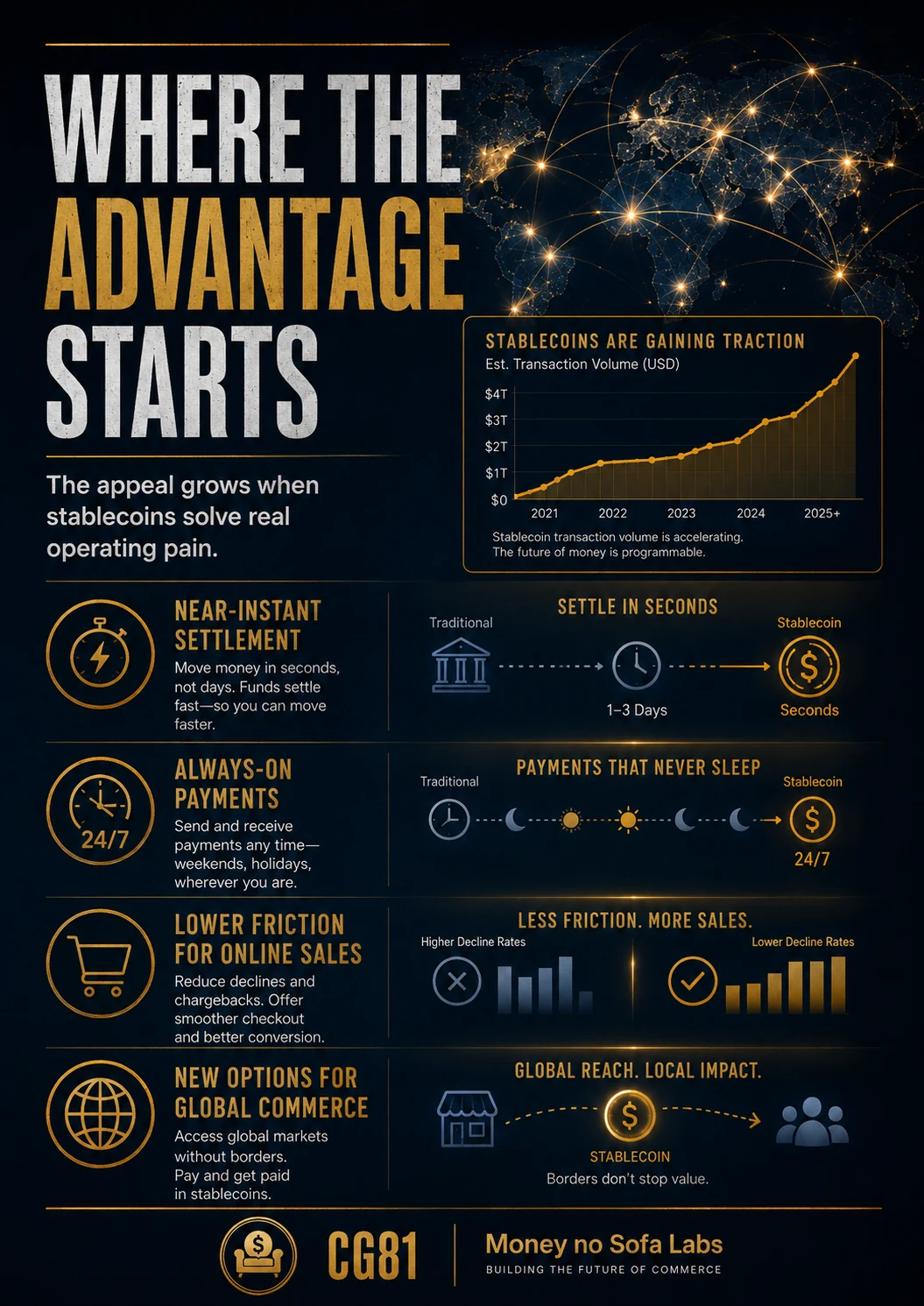
Stablecoins are strongest when several frictions appear together:
- the customer and business operate in different countries;
- the local banking route is slow or expensive;
- the receiving business prefers dollar-linked value;
- the payer already holds stablecoins or can access them easily;
- payment speed materially improves working capital;
- the transaction does not depend on card-style dispute protection;
- the business has a compliant path to account for and convert the funds.
A single benefit may not justify the change. A payment that settles in minutes is not automatically superior if the customer needs twenty minutes of support to complete it. A low network fee is not meaningful if the conversion spread is high. A chargeback-free payment can be valuable to a merchant, but the absence of familiar recourse may reduce customer trust.
The advantage is corridor-specific. In some markets, instant bank payment systems already provide fast, low-cost domestic transfers. Stablecoins then need to solve a different problem, such as international availability or dollar access. In other markets, banking hours, correspondent relationships, and currency controls create a much wider gap.
The BIS noted in 2026 that roughly 98% of stablecoin value was dollar-denominated and that wider use could reinforce existing currency hierarchies. For businesses in unstable-currency environments, that dollar linkage can be useful. For policymakers and local financial systems, it can also create concerns about digital dollarization and monetary sovereignty. A merchant may see a faster payment; the economy may see a shift in how money is stored and used.
Small-business use cases that make sense
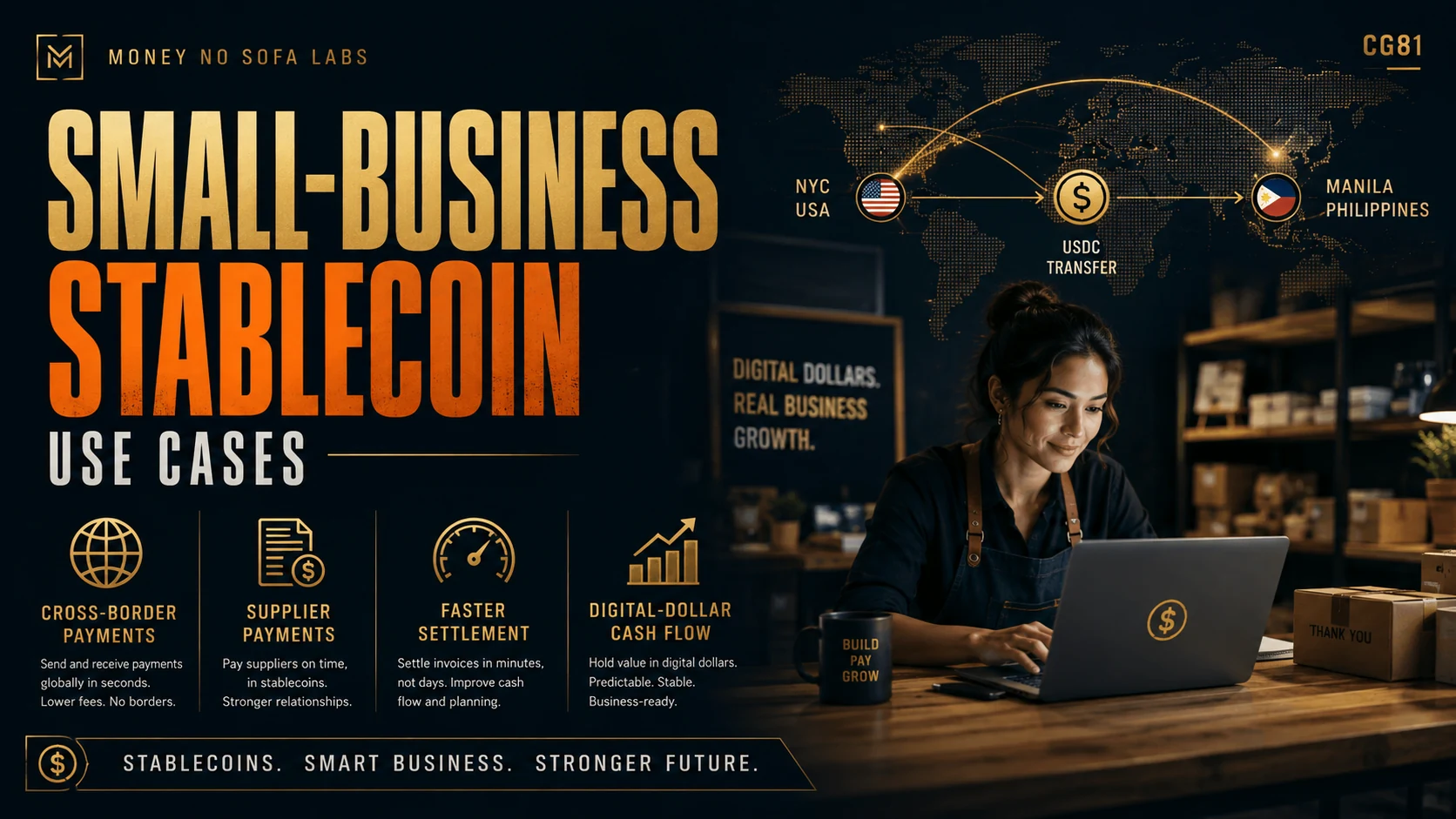
International client invoices
A freelancer or agency can offer a stablecoin option when bank wires are expensive, the client already uses digital assets, or receiving dollars through traditional channels is slow. The invoice should specify the token, network, amount, wallet or payment link, payment deadline, and how exchange-rate differences are handled.
Global contractor payouts
A company paying contractors in multiple countries may reduce payout delay and intermediary fees. But the company must still consider worker classification, tax reporting, sanctions screening, local legality, and whether the contractor can convert the payment safely.
Digital products and crypto-native customers
Software, research, memberships, and digital goods can fit stablecoin payments because fulfillment is online and customers may already maintain wallets. The business should still prevent duplicate fulfillment and confirm network finality before delivering high-value access.
Marketplaces and platforms
Platforms can use stablecoin rails to accept payments or distribute funds, but complexity increases quickly. Identity, custody, transaction monitoring, refunds, and country restrictions become platform-level responsibilities.
Emergency treasury movement
Some businesses use stablecoins to move value outside banking hours. This can improve speed, but it should not become an excuse to bypass treasury controls. Wallet permissions, address allowlists, transaction caps, and independent approval become essential.
The pattern across these use cases is clear: the payment solves a defined operational problem. It is not added because “crypto is the future.”
How customers actually pay
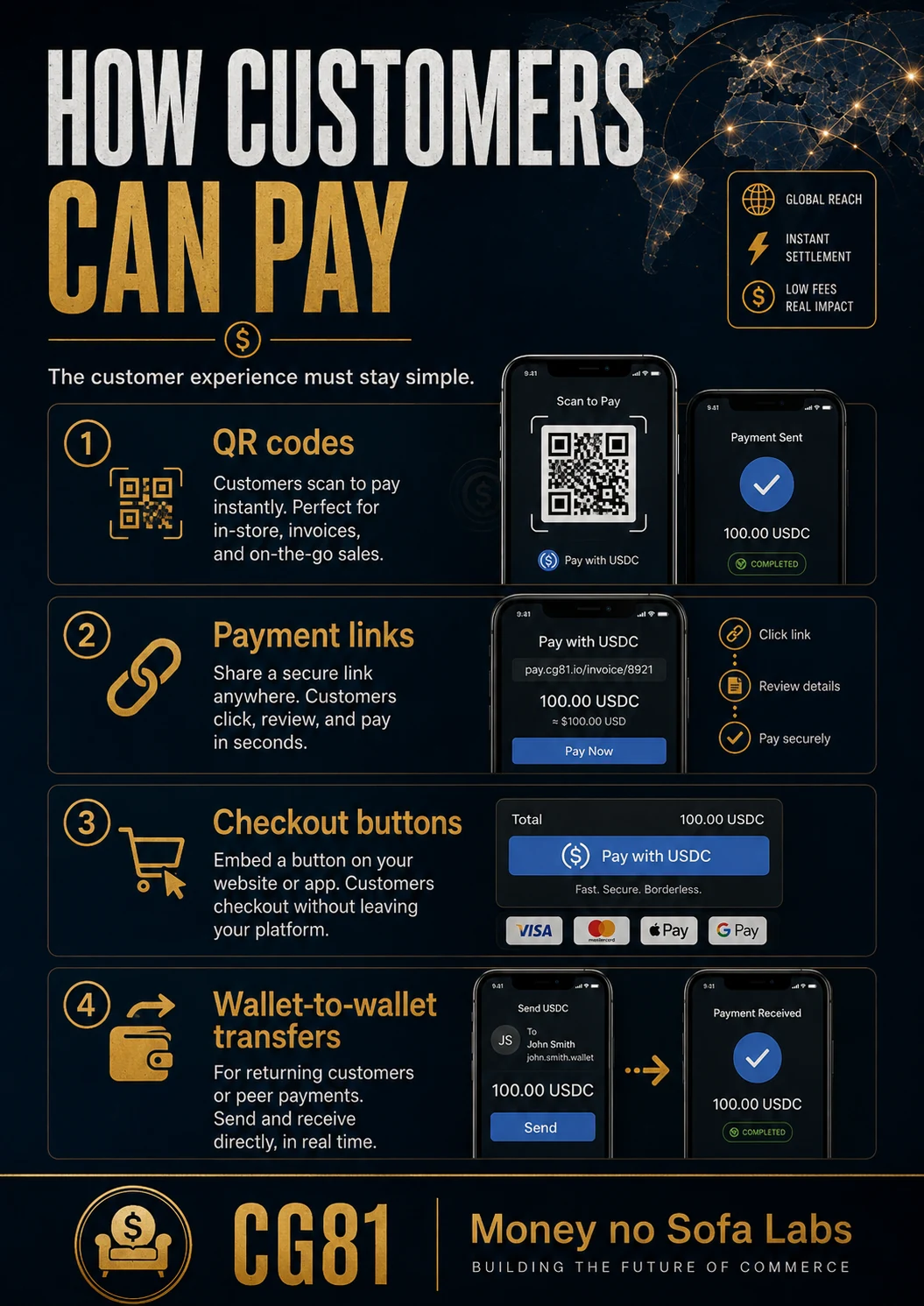
A typical customer flow has five stages:
- The customer selects the stablecoin or crypto payment method.
- The checkout displays the amount, supported token, supported network, and expiration time.
- The customer connects a wallet or scans a payment request.
- The provider monitors the blockchain transaction and confirms payment.
- The merchant receives the token or a fiat settlement, depending on the product.
Every stage can create friction. Customers can choose the wrong network, send an unsupported token, underpay after a fee, copy an address incorrectly, or abandon the transaction when a wallet asks for an unfamiliar signature. Good checkout design constrains choices, validates the network, displays the exact amount, and provides a clear confirmation state.
Refunds require special attention. Stripe’s documentation says stablecoin refunds return to the customer’s original wallet and that stablecoin payments do not have conventional dispute support. That may reduce chargeback exposure for the business, but it changes the customer-service model. The refund policy must explain timing, exchange-rate treatment, network limitations, and what happens if a wallet is no longer accessible.
Recurring payments are also evolving. A provider may support stablecoin payments for invoices or subscriptions, but recurring wallet authorization does not always behave like card-on-file billing. Businesses should test renewal, failed payment, cancellation, and recovery flows rather than assuming feature labels imply identical behavior.
The risks that can erase the benefit
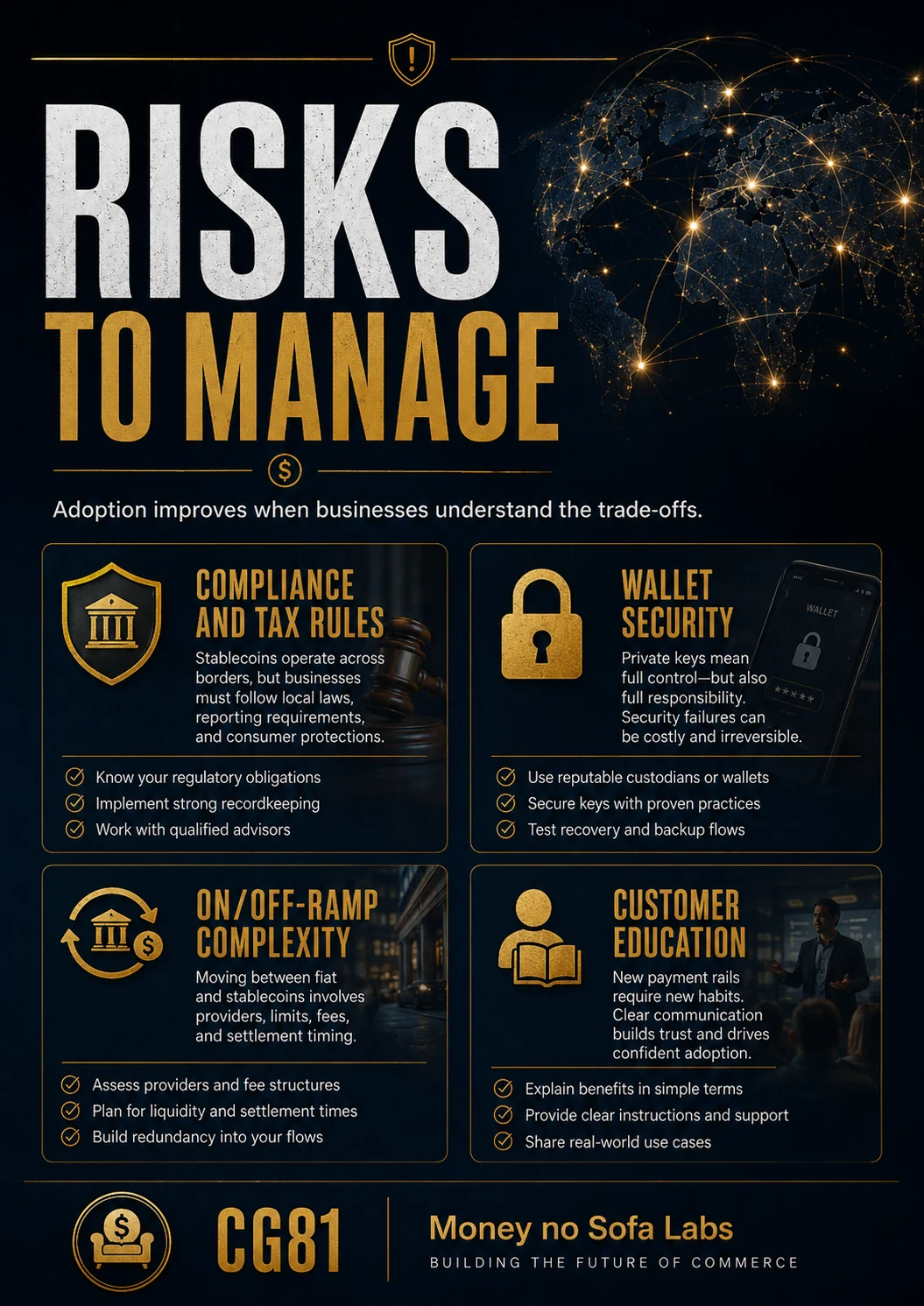
Operational mistakes
Sending funds to the wrong address or network can be difficult or impossible to reverse. Address books, allowlists, test transactions, and approval thresholds reduce this risk.
Issuer and depegging risk
A stablecoin targets stability; it does not guarantee it under every condition. Businesses should understand the issuer, redemption mechanism, reserve disclosures, and concentration risk.
Provider concentration
If one processor, exchange, or wallet is the only conversion path, an account review or outage can interrupt access to funds. Maintain a documented alternative before it is needed.
Compliance and sanctions
Blockchain visibility does not eliminate compliance obligations. Businesses may need identity checks, sanctions controls, transaction monitoring, record retention, and local legal analysis depending on their role and jurisdiction.
Accounting and tax
The invoice currency, received token value, conversion value, fees, and timing can produce different accounting entries. The business needs a policy for valuation, evidence, and reconciliation.
Customer trust
A technically efficient payment method can reduce conversion if the audience does not understand it. Offer it as an option, not a forced migration, until demand proves otherwise.
False yield assumptions
Stablecoins are sometimes marketed together with yield. Payments and investment are separate decisions. The BIS has highlighted that remuneration models can resemble cash-management instruments or depend on riskier market activity. A business should not turn operating cash into a yield strategy without a separate treasury assessment.
The total-cost comparison

Build a corridor scorecard using real transactions. Include:
- processing or transfer fee;
- foreign-exchange spread;
- payout or withdrawal fee;
- network fee;
- settlement time;
- payment failure rate;
- chargeback and fraud cost;
- refund cost;
- support minutes per transaction;
- reconciliation minutes;
- compliance and accounting overhead;
- cash-flow value of faster settlement;
- customer conversion rate.
Suppose a card payment costs 3.5% after cross-border and currency effects, settles in four days, and carries chargeback exposure. A stablecoin route may cost less and settle faster. But if 20% of customers require assistance and conversion adds a hidden spread, the advantage may disappear.
Conversely, a bank wire with a low visible fee may be expensive after correspondent deductions, customer effort, and a week of delay. The stablecoin option can win even if its direct fee is not the lowest.
Use weighted costs. A one-day improvement in settlement matters more to a cash-constrained business than to a company with large reserves. A chargeback matters more for a digital product with instant fulfillment. A customer-support burden matters more when average order value is low.
Go deeper: Stablecoins for Normal Businesses
Turn this payment-rail comparison into a practical operating framework for settlement, custody, conversion and business risk.
A controlled pilot
Do not replace the payment stack. Run a pilot:
- Choose one corridor with visible pain.
- Select one supported stablecoin and one network.
- Offer the option to a small group of existing customers.
- Set a monthly transaction cap.
- Use automatic fiat settlement initially if available.
- Document invoice, refund, support, and reconciliation procedures.
- Track cost, payment time, conversion, support, and errors for two full cycles.
- Expand only if the measured advantage survives the operational overhead.
The pilot should include a failed payment, refund, underpayment, and customer-support test. A payment method is not ready because the happy path works.
Settlement speed is not the same as business finality
A blockchain transaction can confirm quickly while the business process remains incomplete. The merchant may still need a provider to screen the transaction, convert the token, release a payout, reconcile the invoice, and make funds available in a bank account. “Settled on-chain” and “usable in operations” are different milestones.
Measure four timestamps: customer initiation, blockchain confirmation, provider acceptance, and usable fiat availability. The relevant improvement is the last one. A fast chain does not help if a provider holds the transaction for review or the business cannot convert funds during local banking restrictions.
Finality also changes the error model. Card systems permit disputes and reversals. Blockchain settlement is designed to be difficult to reverse. That can reduce merchant uncertainty after confirmation, but it increases the importance of getting the amount, asset, network, address, and refund procedure correct before the transfer.
Define the role your business is playing
A merchant accepting a provider-managed stablecoin option has a different risk profile from a company receiving tokens directly into its own wallet. A marketplace distributing funds to third parties has a different profile again. Before launch, document whether the business is acting only as a merchant, holding customer assets, facilitating transfers, providing conversion, or operating a platform.
The further the company moves from accepting payment toward custody or transmission, the more demanding the legal and compliance analysis can become. Do not infer regulatory status from a software interface. A wallet button does not define the business’s obligations.
Provider due diligence should cover licensing claims, supported countries, sanctions controls, reserve and custody arrangements, incident history, data retention, payout terms, account-freeze procedures, and access to transaction records.
Create a treasury policy before holding stablecoins
Accepting a stablecoin and holding it are separate decisions. The default pilot should often convert receipts into the operating currency. Holding can expose the business to issuer risk, depegging, provider access risk, wallet security, and accounting complexity.
A treasury policy should define:
- which stablecoins and networks are permitted;
- maximum balance and holding period;
- approved wallets and custodians;
- who can initiate and approve transfers;
- address allowlisting and test-transaction rules;
- conversion triggers;
- backup access and key recovery;
- how incidents are escalated;
- whether yield or lending is prohibited.
Operating cash should not drift into an investment position because a platform placed an “earn” button next to the balance.
Price the customer experience, not only the transaction
Stablecoin payment pages should explain the exact token and network without turning checkout into a technical tutorial. Display the amount, expiration, refund policy, and confirmation state. Avoid presenting several nearly identical networks unless the audience genuinely needs the choice.
Customer support needs scripts for the wrong network, wrong token, underpayment, overpayment, delayed confirmation, refund, and wallet-access problem. Track which questions occur. If the same confusion repeats, fix the interface or remove the option.
For higher-value invoices, a payment request can include a small test transaction or a provider-hosted link that reduces address risk. For low-value purchases, the support burden may make direct wallet settlement uneconomic.
A corridor decision table
| Question | Favors current rail | Favors stablecoin pilot |
|---|---|---|
| Is the payment domestic? | Yes, with strong card or instant-bank acceptance | No, cross-border friction is material |
| Does the customer already use a wallet? | No | Yes |
| Is dispute protection important? | Yes | Low or contractually managed |
| Does settlement delay affect cash flow? | Little | Materially |
| Can the business reconcile and document the payment? | Not yet | Yes |
| Is compliant conversion available? | Unclear | Yes |
| Will support complexity erase savings? | Likely | Unlikely |
The table does not produce an automatic answer. It forces the team to identify the source of value before adding a new rail.
Choose network support conservatively
The same stablecoin can exist on several networks, but those versions are not interchangeable at the wallet level. Supporting more networks can improve reach while increasing the chance of customer error and operational fragmentation. Begin with the network your provider supports most clearly and your customers actually use.
Document confirmation thresholds, typical fees, outage behavior, provider maintenance procedures, and what happens when a network is congested. Do not advertise “instant” settlement as a guarantee. Use a confirmation message that reflects the actual status: detected, confirmed, accepted, converted, or paid out.
A narrow list of supported assets also simplifies training, support, reconciliation, and incident response. Breadth is not maturity when each additional option creates another failure path.
The pilot should also define who can disable the method immediately when a provider, token, network, or compliance condition changes.
The next payment stack is plural

The likely future is not cards or stablecoins. It is a layered stack. Domestic cards will remain strong where consumer familiarity, credit, rewards, and dispute protection matter. Instant bank systems will dominate some local transfers. Stablecoins will grow where global reach, dollar linkage, programmable settlement, or non-banking hours create an advantage.
Businesses should route payments rather than declare allegiance. The checkout can present the most relevant method based on country, transaction size, customer preference, and product type. Treasury systems can decide whether to hold, convert, or distribute funds. Accounting can normalize the records behind the scenes.
The best infrastructure becomes invisible. Customers should not need to understand the settlement architecture to trust the purchase. Merchants should not need to become token traders to accept a payment.
Brazil and emerging-market realities
Brazil already has a strong instant-payment system in Pix, so a stablecoin does not automatically improve domestic payments. The more relevant opportunities are international invoicing, dollar-linked settlement, global contractor payments, and access to customers or suppliers outside the domestic system.
At the same time, businesses must account for Brazilian tax, accounting, foreign-exchange, consumer, and crypto-asset rules. The operational convenience of a wallet does not replace legal classification. For a Brazilian freelancer, a stablecoin can shorten the path from an international client to received value, but the income still needs to be documented and handled correctly.
Emerging markets also face the macroeconomic question described by the BIS: widespread dollar-denominated stablecoin use can accelerate currency substitution. What helps one business manage volatility may influence the financial system if adopted at scale. That does not make the payment wrong; it means the business decision exists inside a larger policy environment.
Reconciliation is where pilots become systems
A stablecoin pilot may look successful at checkout and still fail in the back office. Each payment needs a durable link between invoice, customer, transaction hash, token, network, fiat value, fees, conversion event, and accounting entry. Without that chain, month-end close becomes a manual investigation.
Automate the evidence package. Store the provider receipt, blockchain reference, exchange rate used, settlement record, and refund state. Use a unique invoice identifier in the payment request where the provider supports it. Reconcile exceptions daily during the pilot rather than accumulating uncertainty until the end of the month.
The best payment rail is not merely the one that moves funds fastest. It is the one the finance team can explain, document, and audit without heroic effort.
What to do next

Start with the statement of pain: “We lose X in fees, Y days in settlement, and Z hours in support or reconciliation.” Then compare a stablecoin route using the same units. If the improvement is material, run the controlled pilot. If the current card or bank method already works well, do not introduce complexity simply to appear innovative.
Stablecoins are not better than cards until they are. The “until” is not a date. It is a corridor where the economics, customer behavior, provider availability, and operational controls align.
Educational notice: This article provides general editorial information and is not financial, tax, accounting, legal, payments, or compliance advice. Stablecoin availability and regulation vary by country and provider.
Selected sources
The headline is only the start.
Ask Nova what this story could change in your budget, savings, debt, investments or next purchase.