Iran keeps energy risk alive, the U.S.–China relationship still runs through AI, chips and rare earths, and Brazil remains in a live tariff negotiation with Washington. Here is what could reach your wallet first.
Trump Puts Oil, AI and Global Trade on Alert — Here’s Where Your Money Could Feel It
Iran keeps energy risk alive. The U.S.–China relationship still runs through AI, chips, rare earths and tariffs. Brazil remains in a live tariff negotiation with Washington. Three political fronts, one practical question: which one reaches prices, borrowing or your portfolio first?
Trump has put three different money channels back in focus at the same time: energy, technology and trade. The headlines are political. The transmission mechanisms are financial. Oil can move through fuel and freight. U.S.–China competition can move through chips, AI infrastructure and strategic minerals. Tariffs can move through exporter margins, currencies and consumer prices.
None of those effects is automatic. A presidential meeting does not guarantee a trade deal. A geopolitical threat does not guarantee a higher oil price. A tariff does not automatically raise every retail price by the tariff rate. Money no Sofá is treating those distinctions as the point, not as fine print.
Iran, China and Brazil are all tied to live U.S. policy decisions with potential market consequences.
Energy, electronics, inflation, rates, jobs, exports and investments do not react through the same channel.
Watch actual tariff changes, oil flows, export rules, published agreements and measurable prices.
1. Iran: oil can turn geopolitics into a household bill
On September 22, Trump said U.S.–Iran talks were continuing and that he believed a settlement could eventually be reached. He also repeated that the United States would not accept Iran obtaining a nuclear weapon. Reuters reported those comments while negotiations and regional security remained unresolved.
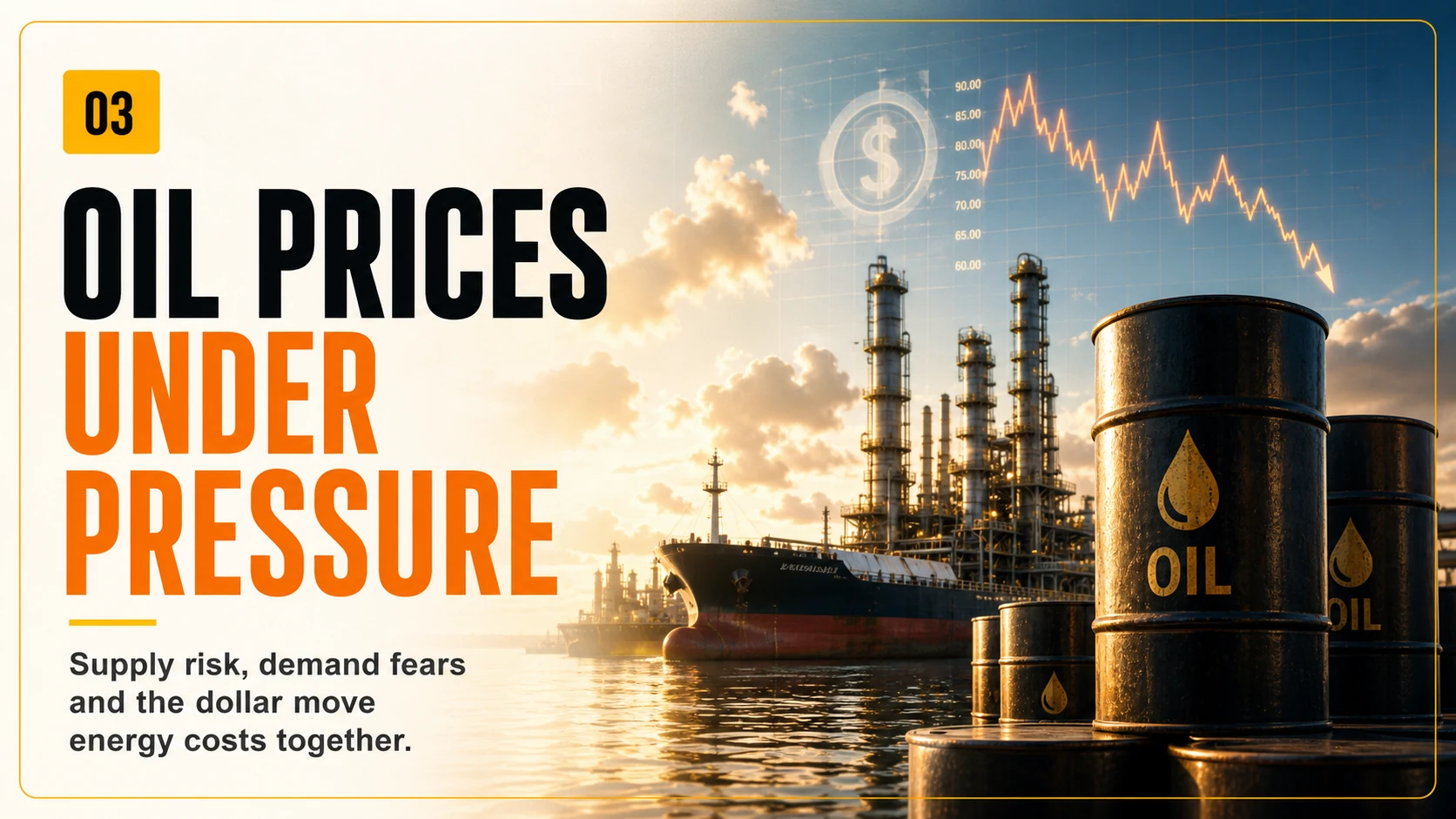
That matters because the energy market does not need a complete shutdown to reprice risk. Traders can react to the probability of disruption, especially around major shipping routes. At the same time, the recent market has shown the other side of that equation: Reuters reported on September 22 that Brent crude slipped below $100 a barrel as supply prospects improved. In other words, geopolitical tension can raise the risk premium, but improved flows can push the price the other way.
For a household, the useful signal is persistence. One volatile trading session is noise. Several weeks of higher energy costs can become a budget issue. If that pressure starts showing up in inflation data, it can also complicate central-bank decisions and borrowing costs.
MNS reading: do not treat every oil headline as a forecast. Watch whether the geopolitical story becomes a sustained change in energy, freight and inflation.
2. China: AI, chips and rare earths are now part of the money story
Xi Jinping’s state visit to Washington took place on September 24. The White House published video and official material documenting the visit and joint remarks. We are not treating a sweeping new economic deal as confirmed unless concrete terms are published by reliable sources.
The verifiable backdrop is already substantial. Reuters reported that U.S. and Chinese officials had been discussing trade, AI and rare earths before the meeting. The bilateral trade truce remains a live issue, and Reuters said it is due to expire on November 10. U.S. Treasury Secretary Scott Bessent also said the two sides had agreed to continue a formal AI safety dialogue, including communications around serious AI incidents.
Rare earths matter because they sit inside supply chains for electronics, vehicles, industrial equipment and defense technology. Advanced chips matter because modern AI systems depend on expensive computing infrastructure. Trade rules around either category can change costs, access and corporate margins.
There is also an energy angle. Reuters reported that Washington and Beijing discussed reducing or removing China’s 15% tariff on U.S. liquefied natural gas. That negotiation connects two stories that often look separate on a news homepage: trade policy and global energy flows.
MNS reading: the important outcome is not whether the meeting looked friendly or confrontational. The useful questions are measurable: Were tariffs changed? Were rare-earth restrictions changed? Were chip rules changed? Was the trade truce extended? Were purchase commitments actually implemented?
3. Brazil: the tariff story is more direct
Brazil’s exposure is simpler to understand. Reuters reported that the United States announced a 25% tariff on some Brazilian goods and a 12.5% tariff on goods from dozens of countries, including Brazil. President Luiz Inácio Lula da Silva said Brazil would not invoke its reciprocity law while negotiations with Washington continued, while leaving open the possibility of reciprocal measures if talks fail.
A 25% tariff does not mean every affected product becomes 25% more expensive for the final buyer. Companies can absorb part of the cost, change suppliers, redirect exports or adjust margins. Currency moves can amplify or soften the effect. Demand can change too.
For Brazil, this means watching exporters and exchange rates as closely as the tariff headline itself. If negotiations reduce the trade barrier, the pressure changes. If they fail and reciprocal measures appear, the number of affected channels grows.
4. Why markets care now
These developments are arriving while investors are already dealing with high borrowing costs, inflation sensitivity and aggressive spending on AI infrastructure. That makes policy surprises more important because the system has less room for cheap mistakes.
On September 22, Reuters reported that the Nasdaq reached an intraday record while oil fell below $100. That combination is useful. It shows that markets can be optimistic about AI at the same moment they are repricing energy risk. “Risk-on” and “risk-off” are not always one switch anymore.
A household can have the same contradiction. A technology portfolio can rise while a fuel bill stays elevated. A business can benefit from AI productivity while paying more for imported components. A saver can earn more from high rates while a borrower pays more for debt.
5. What could hit your wallet first?
Energy
Fuel and freight are usually the clearest short path from geopolitics to daily cash flow. The size of the effect depends on how long the disruption lasts and how local pricing works.
Technology
Chip restrictions, rare-earth availability and tariff changes can alter costs across electronics and AI infrastructure. The effect may be faster for businesses than for households.
Borrowing
If energy or trade shocks keep inflation elevated, central banks can have less room to cut rates. That can matter for credit cards, mortgages and business financing even if the original headline had nothing to do with a bank.
Investments
Oil producers, chipmakers, AI infrastructure companies, exporters and import-heavy businesses can react differently to the same policy change. That is why a geopolitical headline should not be converted into a one-direction market prediction.
6. Three numbers to watch
7. What happens next
The next useful update is not another dramatic headline. It is a document, a tariff schedule, an export-control change, a confirmed trade commitment, an oil-flow change or a price move that persists long enough to matter.
For China, watch for published terms around the trade truce, rare earths, chips and AI dialogue. For Iran, watch negotiations alongside actual shipping and oil flows. For Brazil, watch whether talks produce tariff relief or whether the reciprocity process advances.
That is the MNS filter: what changed, what is confirmed, and what number should a normal person watch next?
8. Ask NOVA about this
Your situation may not look like “the market.” You may be deciding whether to finance a car, buy electronics, hold more cash, refinance debt or simply understand whether a geopolitical story deserves attention.
NOVA is built for that translation. Bring the headline into your own budget instead of trying to trade the headline itself.
Sources & verification
- Reuters — Trump says U.S.–Iran talks continue
- Reuters — U.S.–China tariff war and trade-truce timeline
- Reuters — U.S.–China AI safety dialogue
- Reuters — U.S.–China LNG tariff talks
- Reuters — Brazil holds reciprocity while U.S. trade talks continue
- Associated Press — progress and unfinished commitments ahead of the Trump–Xi meeting
- White House — September 24 state-visit video record and joint remarks
- Reuters — Nasdaq record and oil below $100 on September 22
This article is for informational purposes only. It is not investment advice and does not predict election outcomes, policy outcomes or market direction. Political, trade and market conditions can change quickly.
The headline is only the start.
Ask Nova what this story could change in your budget, savings, debt, investments or next purchase.