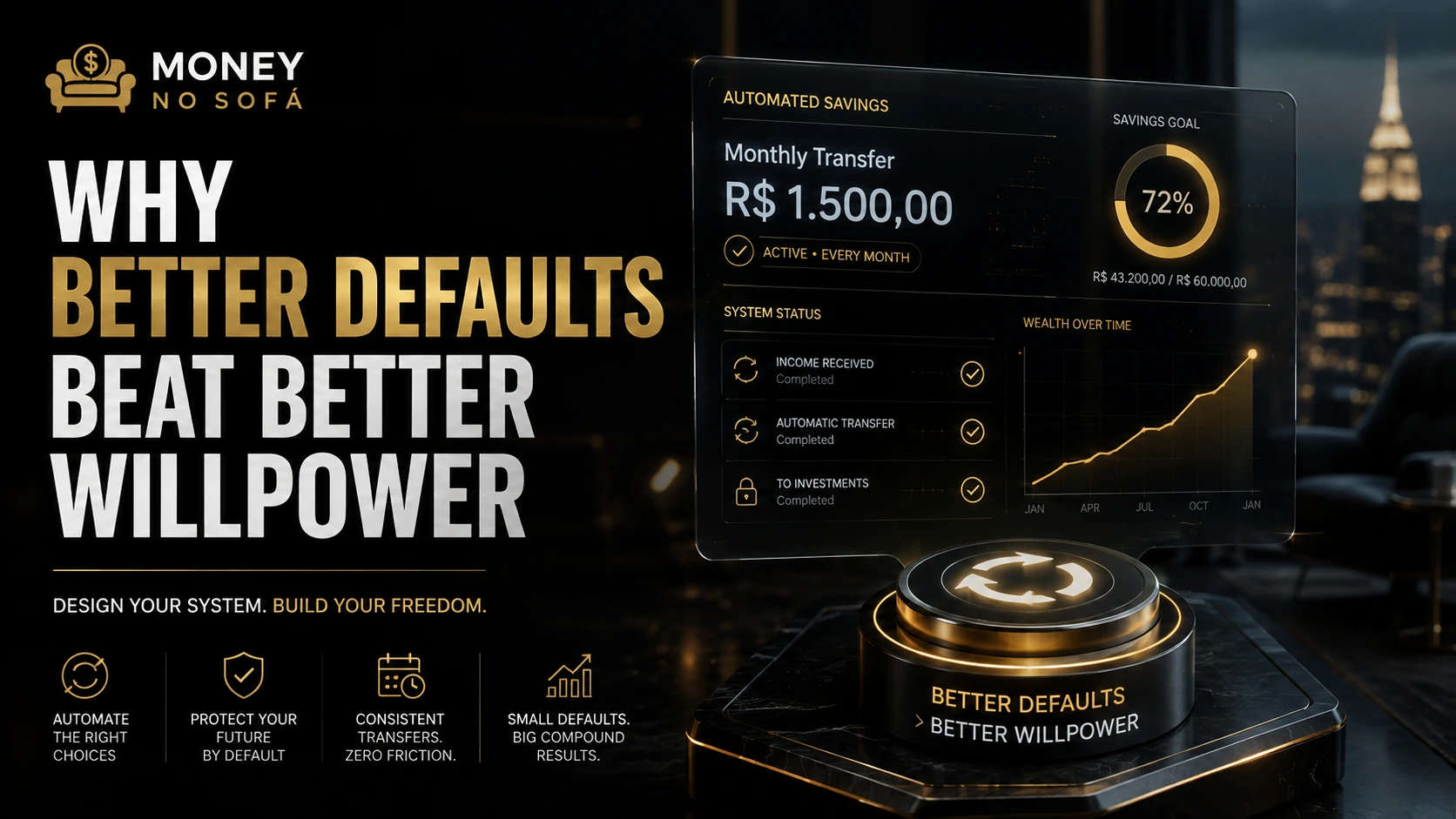
Good financial habits are easier when the default behavior already points in the right direction. Systems can reduce the need for constant self-control.
Willpower is useful. It is also unreliable.
You can be disciplined in the morning and tired at night. You can make a careful plan on Sunday and ignore it during a stressful Wednesday. Financial systems that depend on constant self-control tend to work only when life is calm.
Defaults decide more than intentions
If saving requires a manual transfer every month, the default is not saving. If a subscription renews automatically, the default is continuing to pay. If your card is stored in every shopping app, the default is fast checkout.
Small design choices create financial behavior.
This means you can improve money decisions by changing what happens automatically instead of trying to become permanently more disciplined.
Make the good option easier
Useful financial defaults include:
- automatic savings on payday;
- one account dedicated to fixed bills;
- calendar reminders before annual renewals;
- a default waiting period for larger discretionary purchases;
- automatic debt payments above the minimum when cash flow allows;
- removing saved payment details from high-temptation apps.
Notice that some defaults make an action easier and others make an action slightly harder. Both can be useful.
Good defaults still need review
Automation can become neglect if nothing is checked.
A savings amount that made sense two years ago may now be too low. A subscription you once loved may now be unused. A bill may have increased quietly.
The best system is automatic enough to reduce effort and visible enough to stay intentional.
That balance is part of the approach in How to Use Smart Tools and Better Habits to Save More Money.
Design for your weak moments
Many people create financial rules based on their best behavior. A stronger system is designed for the opposite.
If late-night shopping is your weak spot, make checkout harder at night. If you forget bills, automate them. If you regularly raid savings, move the account away from your daily banking screen.
The system should reduce the chance that a temporary mood becomes a permanent financial consequence.
Defaults reduce negotiation
One hidden benefit is emotional. When a rule is already decided, you do not need to argue with yourself every time.
You do not ask whether to save this month because the transfer already happened. You do not decide whether a $400 impulse purchase deserves a same-day exception because your rule says it waits 48 hours.
Fewer repeated negotiations create more consistency.
Willpower should be the backup, not the operating system
There will always be decisions that require judgment. But routine behavior should not demand heroic discipline.
Use willpower for unusual situations. Use defaults for the ordinary ones.
Choose one financial behavior you keep trying to “be better at.” Instead of making another promise, change the default: automate, schedule, separate or add friction so the better choice becomes easier next time.
Money no Sofá — Money for real life.
The headline is only the start.
Ask Nova what this story could change in your budget, savings, debt, investments or next purchase.