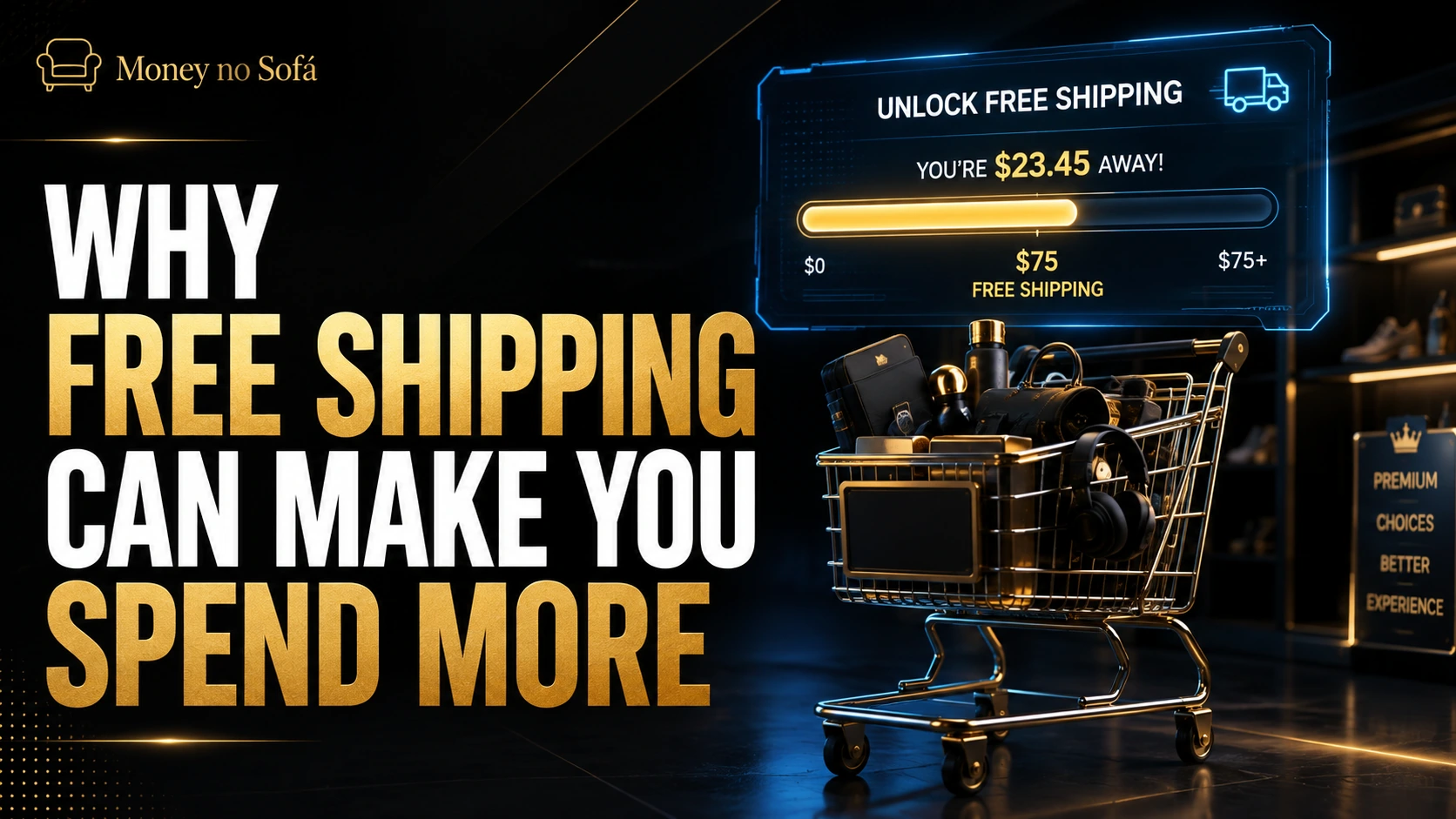
Free shipping can save money, but thresholds and minimum baskets can quietly increase the size of the purchase.
Free shipping feels like a win because it removes a visible cost. The problem is that retailers know exactly how powerful that word is.
To unlock free delivery, shoppers often add more to the cart, choose a more expensive seller or buy sooner than they planned. The shipping fee disappears, but the total purchase can increase.
The threshold changes the target
Imagine your cart is $42 and free shipping starts at $50. Paying $6 for delivery feels annoying, so you add an $11 item to “save” the shipping fee.
You did not save $6. You spent $5 more than the original delivered total.
The math is simple, but the psychology is strong because people dislike paying for something that feels like it adds no product value.
Retailers are selling the basket, not just the item
Free-shipping thresholds are designed to increase average order value. That does not make them unfair. It simply means the incentive has a business objective.
Your objective is different: get what you need at the best total cost.
That is why the right comparison is not “shipping versus no shipping.” It is:
- total price with delivery;
- total price after adding extra items;
- price at another retailer;
- whether the extra item was already on your list.
Convenience can create artificial urgency
Free shipping is often paired with countdowns, limited-time offers or same-day delivery. The combination makes the transaction feel more valuable and more urgent.
But urgency can prevent comparison. If an offer makes you spend more to avoid losing a small benefit, the benefit may be controlling the decision.
This connects to a wider pattern we discuss in The Hidden Cost of Convenience Apps: convenience becomes expensive when it changes behavior, not just price.
Sometimes paying shipping is the cheaper choice
This feels wrong because shipping is visible and emotionally irritating. But if you need one $20 item and delivery costs $5, paying $25 can be financially better than buying $50 of products you did not need.
Visible costs are not always bad costs. They are simply easier to notice.
Create a rule before the cart is full
One practical rule is simple: never add an unplanned item just to reach free shipping unless you would buy that item within the next 30 days anyway.
Another is to compare the delivered total across two or three sellers instead of focusing on whether one line says “FREE.”
The best deal is the lowest relevant total, not the most satisfying checkout message.
Next time you are below a free-shipping threshold, calculate both totals: your original basket plus delivery, and the larger basket with free shipping. Choose the lower number unless the added item was already planned.
Money no Sofá — Money for real life.
The headline is only the start.
Ask Nova what this story could change in your budget, savings, debt, investments or next purchase.