Small subscriptions can become big annual costs. Learn how to audit recurring charges, cancel digital clutter, and keep only the services that earn their place.
17–22 min read · Practical guide · Featured eBook: Wealth Without the Hustle
Why the Subscription Trap Is So Effective
The subscription economy changed the psychology of spending. Instead of asking you to make one painful purchase, it asks for a small recurring payment that feels easy to ignore. A few dollars here, a premium tier there, a free trial that quietly converts into a monthly charge. None of them feels dangerous alone.
That is exactly the advantage. Recurring spending becomes invisible because the decision and the payment happen at different times. You decide once and pay many times. Unless you create a review system, an old decision can survive for years after the original value disappears.
The problem is not that subscriptions are bad. Many are useful. The trap is passive renewal without active value.
Monthly Pricing Hides the Annual Reality
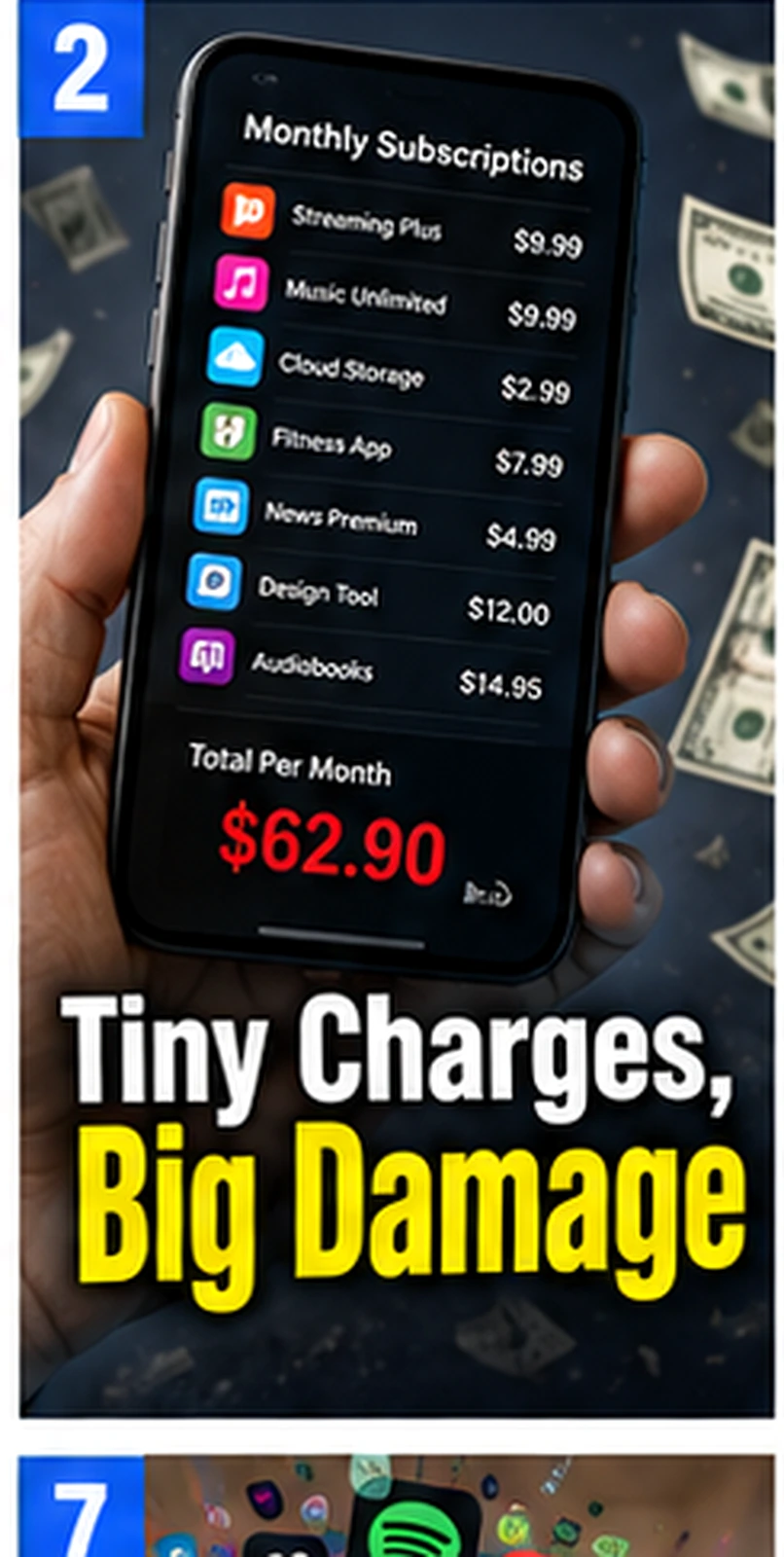
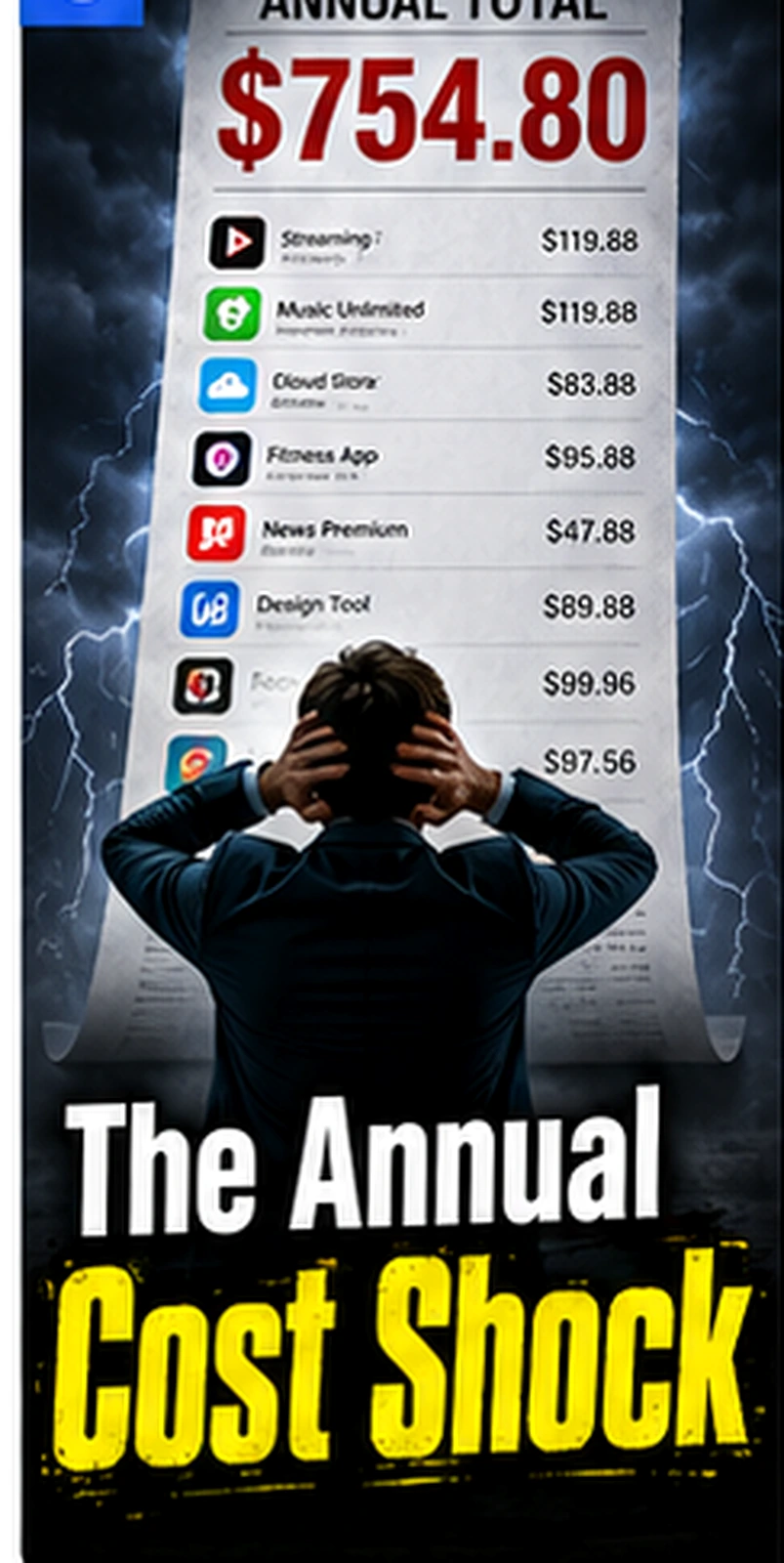
Monthly pricing is psychologically comfortable. A $9.99 service sounds minor. The annual cost is about $120. A $24.99 tool is roughly $300 a year. Five or six small subscriptions can quietly become a four-figure annual category.
Always convert recurring prices into annual numbers before deciding. The question changes from ‘Can I afford twelve dollars this month?’ to ‘Would I intentionally spend $144 a year on this compared with every other goal I have?’ That is a more honest comparison.
The annual lens is especially useful for premium apps, fitness memberships, cloud storage, media bundles and professional tools. It restores proportion.
The Six Subscription Categories Most People Forget
Streaming services are the obvious category, but digital clutter goes much further. Productivity tools overlap. Cloud storage grows through upgrades. Marketplace memberships encourage more purchasing. News and content services accumulate. Fitness and wellness apps survive motivation cycles. Trial-based services renew after the original experiment ended.
There are also business-like personal subscriptions: design software, AI tools, file converters, privacy products and professional platforms. Each can be valuable, but the overlap can become expensive quickly.
The important step is to audit all recurring charges in one place. Looking at only entertainment subscriptions dramatically understates the real category.

Build the Master Subscription List
Review at least 90 days of card, bank, app-store and payment-platform activity. Record the service name, monthly price, annualized price, last meaningful use and whether another service does the same job.
Then add one more field: would I actively buy this again today? This question cuts through sunk-cost thinking. You are not required to defend an old choice. You are evaluating whether the service deserves another year of your money.
Do not rely on memory. Forgotten subscriptions are forgotten precisely because memory stopped noticing them.
Cancel, Keep or Downgrade
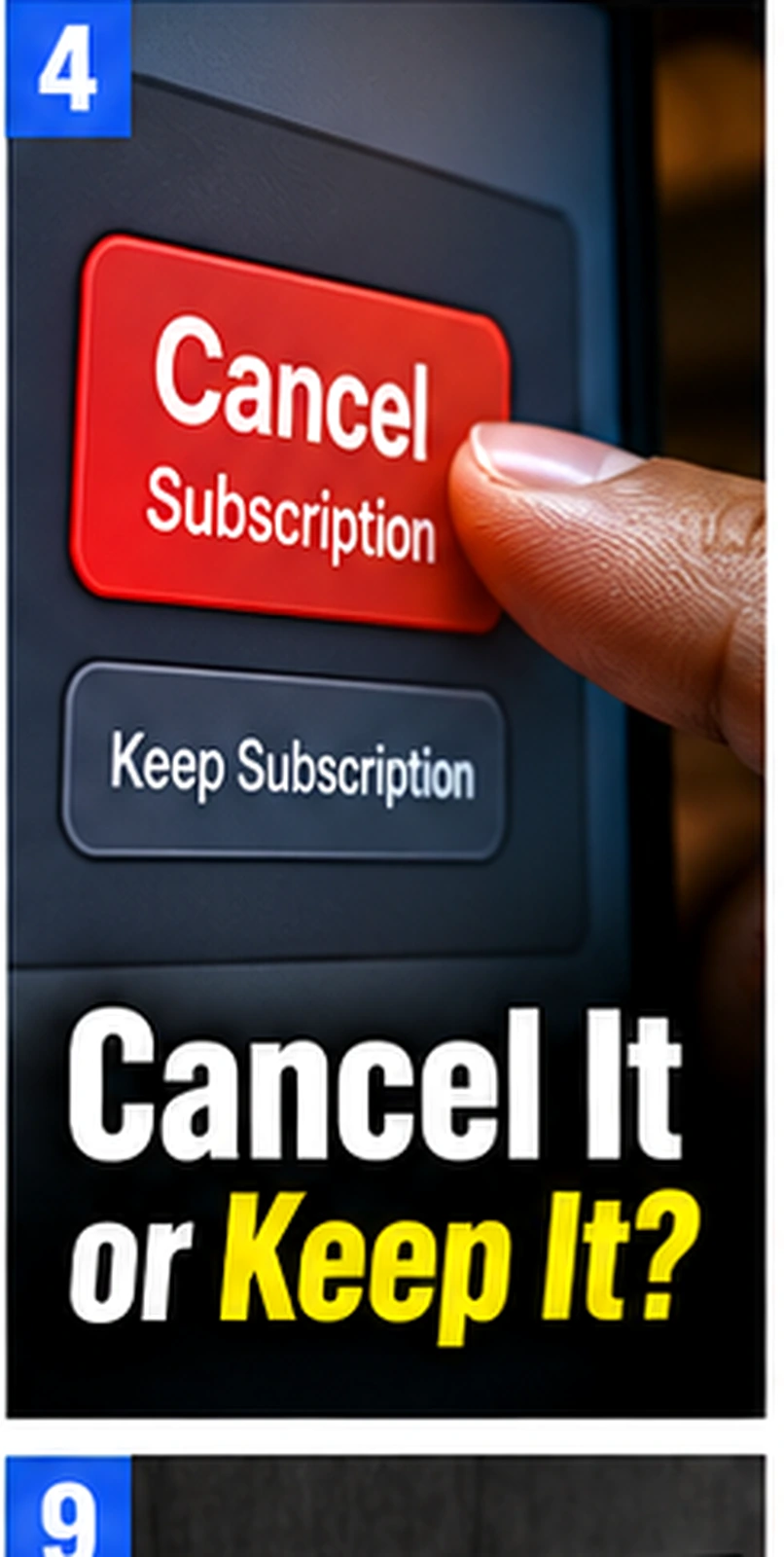
Every subscription should end in one of three decisions. Keep means the service clearly earns its place. Downgrade means the basic tier probably delivers most of the value. Cancel means usage, value or uniqueness is too low to justify another renewal.
Avoid creating a fourth category called ‘maybe.’ If you are uncertain, cancel or pause and see whether you miss the service. Re-subscribing later is easy. Paying indefinitely while deciding is expensive.
A pause can be especially useful for seasonal services. You may only need a sports, media or software subscription during specific months. Treating temporary needs as permanent contracts is a common source of waste.

Watch for Subscription-Induced Spending
Some subscriptions cost more than their listed price because they change your behavior. A delivery membership may reduce fees but increase how often you order. A marketplace membership may create a feeling that you should ‘use the benefit,’ encouraging extra purchases. A premium fitness app may lead to equipment or add-on spending.
This does not mean the membership is automatically a bad deal. It means you should measure total behavior, not only the fee. A service that saves $10 in shipping while triggering $80 in unnecessary purchases is not saving money.
The real cost of a subscription includes the behavior it encourages.
The Tool Overlap Problem
Digital professionals are especially vulnerable to overlapping software. One note app, one project tool, one AI subscription, one design platform, one storage service and one analytics product can become two or three in each category after experimentation.
Run a function audit. Write what each tool is supposed to do. If two tools solve the same problem, decide whether the second one produces enough additional value to justify the annual cost. In many cases, the answer is no.
A simpler tool stack has a second benefit: less cognitive clutter. Fewer systems mean fewer renewals, fewer passwords, fewer notifications and fewer places where your information is stored.

Use Renewal Friction to Your Advantage
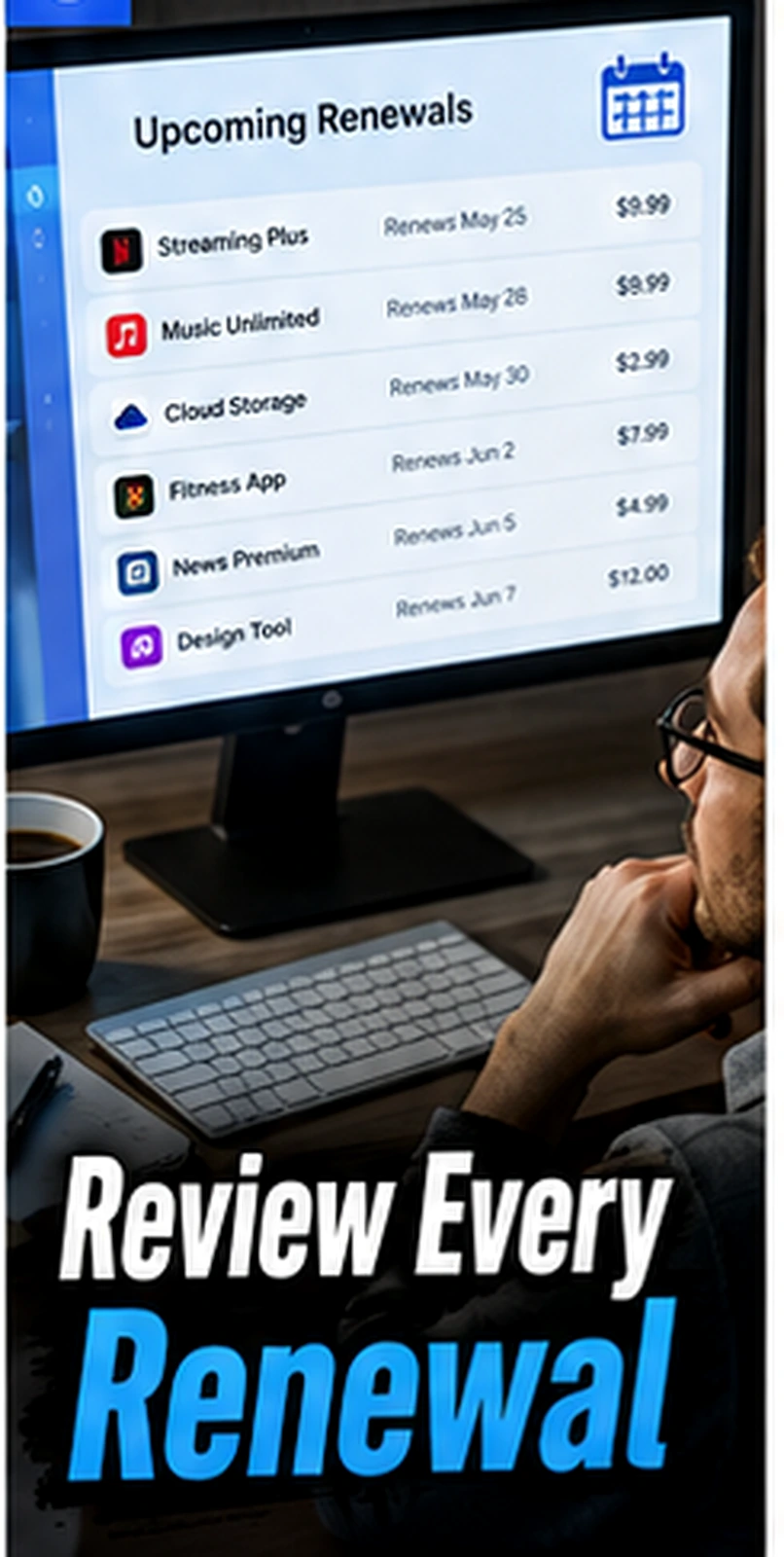
Companies benefit when renewal is invisible. You benefit when renewal creates a moment of reflection. Add calendar reminders seven days before annual charges. Turn off auto-renew for services you are testing. Set a quarterly subscription review date.
The objective is not to make every payment difficult. It is to force high-value decisions back into the present. A service should continue because you choose it, not because your card is still valid.
This small amount of friction can save hundreds over a year without changing your lifestyle at all.
A Real Example: The $147 Monthly Leak
Imagine someone with streaming, music, cloud storage, AI, design, fitness, news, delivery and marketplace subscriptions totaling $147 a month. None feels outrageous. Together they cost $1,764 a year.
The audit finds two overlapping streaming services, an unused fitness app, a premium cloud tier that can be reduced, a marketplace membership that encourages extra buying and a design tool that is no longer needed. The person keeps the services used weekly and removes the rest.
The result is a $72 monthly reduction, or $864 annually, without eliminating the tools that genuinely matter. This is why recurring-cost audits are high leverage.
Build a Personal Subscription Policy
Good policies reduce future drift. Examples: one primary tool per function, no annual plan until usage is proven for three months, every free trial gets a cancellation reminder, every subscription is reviewed quarterly, and any price increase triggers a fresh decision.
You can also set a total subscription budget. This turns the category into a portfolio. If you want to add a new $20 service when the category is already full, you decide which existing service loses its place.
The policy protects you from accumulation without forcing you to reject useful technology.

Watch for Price Increases and Quiet Tier Changes
Subscription costs do not stay still. Services raise prices, change plan structures, reduce features on lower tiers or bundle new benefits that make the increase feel justified. Because the payment is automatic, many users notice only months later.
Create a rule that any material price increase triggers a fresh decision. Do not ask whether the increase is only a few dollars. Ask whether the full annual price still earns its place. A $3 monthly increase is $36 a year; across several services, price creep can become meaningful.
Also check whether your old plan still exists. Some providers introduce cheaper tiers that existing customers never review. Loyalty is not always rewarded automatically. Periodic comparison protects you from paying a legacy price simply because the account has been active for years.
Family Plans Can Save Money—or Hide Waste
Family and shared plans often look efficient because the per-person price is lower. They are excellent when several people genuinely use the service. They are wasteful when the upgrade is purchased for theoretical users who barely engage.
Audit usage by person, not just by account. If only one person watches a premium service, an individual plan may be cheaper. If everyone uses shared cloud storage or music, the family tier may be a strong value. The decision should be based on actual behavior.
This is another example of why unit price can mislead. The cheapest cost per user is irrelevant if the extra users do not need the product.
Subscriptions, Privacy and Security
Digital clutter is not only a money issue. Every account can hold personal information, payment details, usage history or uploaded files. Keeping dormant services expands the number of companies storing data about you and the number of credentials you must protect.
When you cancel a service you no longer need, review whether the account can be deleted and whether stored payment methods or personal files should be removed. Use strong unique passwords and multi-factor authentication for services you keep, especially financial, cloud and identity-related accounts.
Do not cancel legitimate security tools just to reduce cost without understanding the protection they provide. The principle is the same as the rest of the audit: remove redundancy and low value, not necessary protection.
Professional Tools Need a Return-on-Value Test
Freelancers, creators and knowledge workers often carry subscriptions that feel like business investments. Some genuinely are. Others survive because canceling them feels like admitting a project or ambition changed.
Evaluate professional tools by output. Did the service help you earn revenue, save meaningful hours, improve quality, reduce risk or replace another cost? If not, the business label does not automatically make it valuable.
For expensive tools, divide the annual cost by the hours or revenue they realistically support. This is not a perfect calculation, but it forces clarity. A $600-a-year tool used every day can be cheap. A $120 tool you never open can be expensive.
Free Trials Are Not Free If You Forget Them
Free trials are one of the cleanest examples of subscription psychology. The service removes the purchase decision from today and moves the payment into the future. By the time the charge appears, the original curiosity may be gone but the card is still active.
The solution is simple: whenever you start a trial, create a calendar reminder for several days before the billing date. Better still, turn off renewal immediately when the platform allows continued access through the trial period. This preserves the experiment without relying on memory.
Use trials intentionally. Decide what you are testing and what would justify paying afterward. Without a success criterion, a trial can become a permanent subscription simply because canceling never became urgent.
The Emotional Reason We Keep Unused Services
Sometimes a subscription survives because it represents an identity we want to keep. The language-learning app represents the person we planned to become. The fitness membership represents a routine we hope to restart. The professional tool represents a project we are reluctant to admit has changed.
Canceling can therefore feel bigger than the money. It can feel like giving up. Separate the goal from the subscription. You can still learn a language, exercise or build a project later without paying indefinitely for the symbol of that intention.
This distinction makes the audit more honest. You are not canceling an ambition. You are stopping a charge that is not currently helping you achieve it.
FAQ
Are annual plans always cheaper?
They often reduce the effective monthly price, but only if you would have stayed subscribed for the whole year. Paying a discount for twelve months of low usage is still waste.
Should I cancel every service I do not use weekly?
Not necessarily. Some high-value services are seasonal or occasional. Evaluate value relative to cost and purpose.
What about family plans?
They can be excellent value if the household genuinely uses them. Avoid upgrading simply because the larger plan looks efficient on paper.
Do privacy-focused or security subscriptions count?
Yes. They should still be evaluated for real need, overlap and value, but do not remove important security simply to cut costs.
How often should I audit subscriptions?
Quarterly is a strong default, with a deeper annual review.
Related Save Money Guides
- How to Save Money Without Feeling Deprived
- The 30-Day Save Money Reset That Actually Works
- How Families Can Save Money Without Making Life Feel Smaller
- How to Use Smart Tools and Better Habits to Save More Money
Next Step
Wealth Without the Hustle takes this idea beyond subscriptions. The larger lesson is that financial freedom grows when money stops leaking into defaults you no longer choose. Keep what creates value, remove what creates noise, and redirect the difference toward choices that matter more.
The goal is not to live with fewer tools. It is to make sure your tools serve your life instead of quietly billing it forever.
The headline is only the start.
Ask Nova what this story could change in your budget, savings, debt, investments or next purchase.