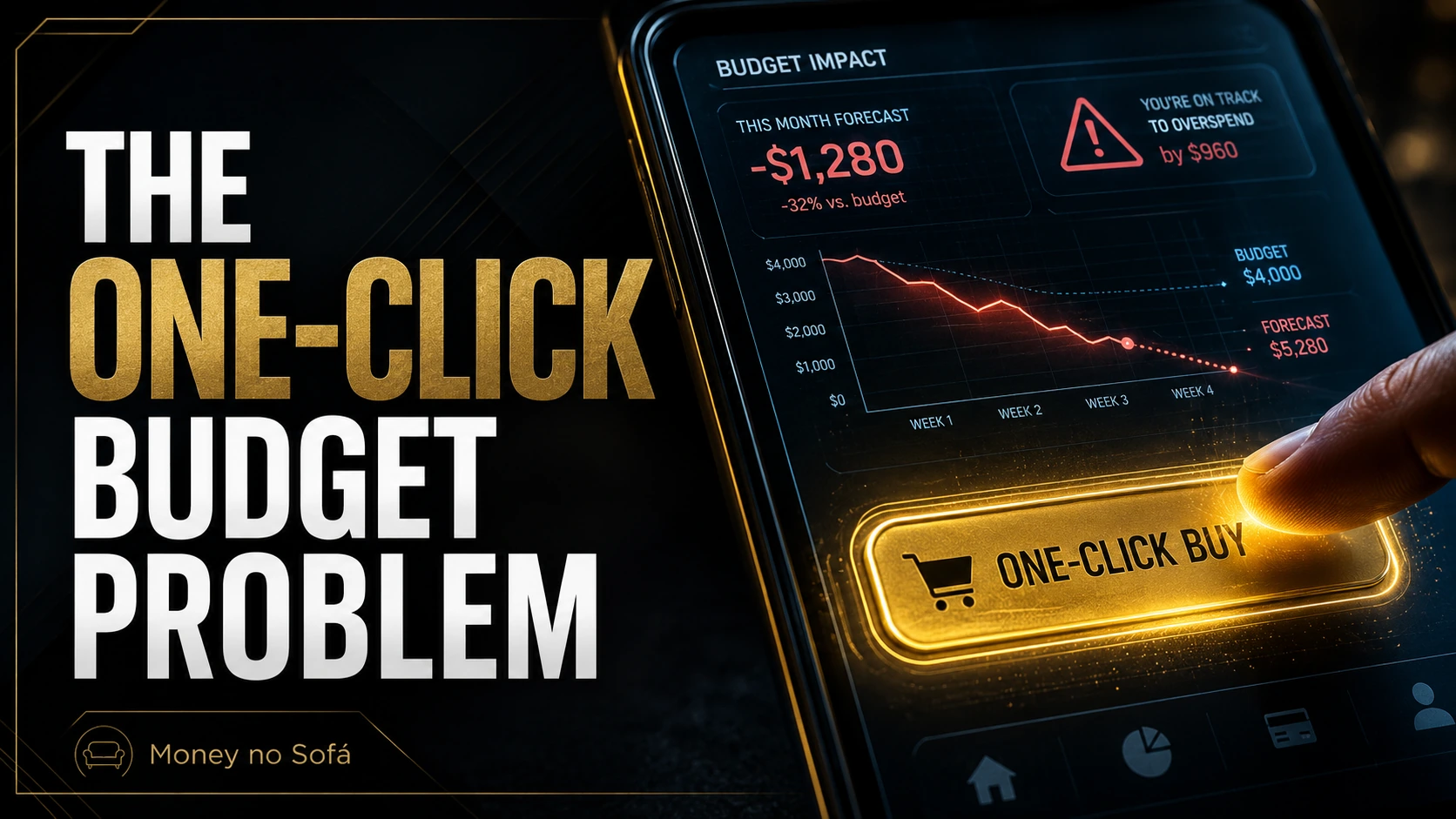
One-click checkout removes friction from buying. It can also remove the moment when you notice what the purchase does to your month.
One-click checkout is one of the smartest inventions in digital commerce. It removes forms, passwords, card numbers and hesitation.
That is exactly why it can become a budget problem.
When the gap between wanting and buying becomes almost zero, your spending decisions can become faster than your financial judgment.
One click changes the feeling of spending
A traditional purchase used to contain small moments of reflection. You reached for a wallet. You typed card details. You saw the total again.
Those steps were inconvenient, but they also created pauses.
Saved payment details remove the pause. The purchase becomes an extension of browsing.
That matters most for low- to medium-cost purchases: cheap enough not to trigger serious thought, frequent enough to damage the month when repeated.
The problem is not technology
One-click checkout is useful. It saves time, reduces abandoned carts and makes routine purchases easier.
The financial problem appears when convenience is combined with boredom, social feeds, personalized recommendations and constant offers. The system can make discovery, desire and payment happen in the same minute.
That can turn discretionary spending into a background behavior.
Your budget sees the pattern
You may remember the $300 purchase. You probably do not remember eight $22 purchases made across a month.
But the bank account treats both totals the same.
This is the same logic behind recurring-cost drift. The individual transaction feels too small to deserve attention, while the cumulative effect becomes meaningful. Our article The Subscription Trap looks at a similar problem with recurring charges.
Put friction where it helps
You do not need to disable every digital convenience. Instead, add friction to the categories where you are most impulsive.
- Remove saved cards from one shopping app.
- Disable one-click checkout for non-essential categories.
- Use a separate wish list before buying.
- Set a weekly discretionary-spending limit.
- Require a one-day wait above a chosen amount.
The best rule is the one that catches your real behavior without making ordinary life unnecessarily difficult.
Make easy buying compete with easy saving
Technology should not only make spending effortless. Use the same principle for your finances.
Automate savings, bill payments and transfers so the good decision happens before you have to think about it. We discuss this broader idea in How to Use Smart Tools and Better Habits to Save More Money.
The goal is balance: convenience should serve your priorities, not quietly replace them.
Look at the last five non-essential purchases you made online. If most happened in under a minute, create one speed bump for that category before the next purchase.
Money no Sofá — Money for real life.
The headline is only the start.
Ask Nova what this story could change in your budget, savings, debt, investments or next purchase.